NAC (Acetylcysteine): 8 Benefits, Side Effects & 6 Precautions
NAC is a glutathione precursor used for respiratory, liver, and mental health conditions. Learn the evidence-based benefits and contraindications.
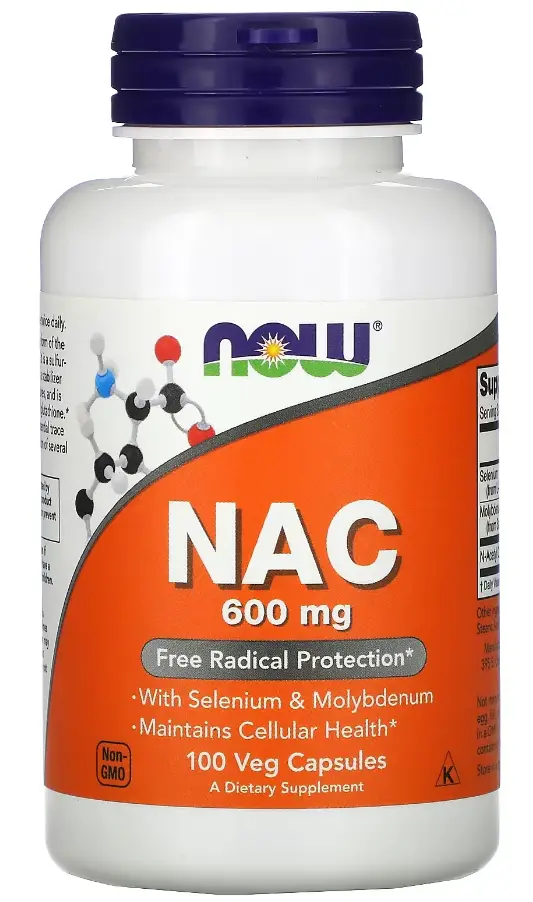
N-acetylcysteine (NAC) has been a staple in hospital medicine since the 1960s. The World Health Organisation includes it on its Model List of Essential Medicines, which says something about its clinical importance. Most people know it as the go-to treatment for paracetamol overdose, but NAC does far more than that. Hospitals use it for respiratory conditions, and researchers have been investigating it for everything from mental health disorders to fertility issues.
The reason NAC gets so much attention comes down to one thing: it’s a precursor to glutathione, your body’s most abundant antioxidant. Unlike glutathione supplements themselves, which get largely destroyed in the digestive tract, NAC provides the cysteine building block your cells need to manufacture their own glutathione. This gives NAC better oral bioavailability and explains why it shows up in so many different clinical contexts.
What exactly is NAC?
Acetylcysteine is the acetylated form of cysteine, a sulphur-containing amino acid. You’ll find cysteine naturally in foods like onions, garlic, eggs, and cruciferous vegetables, but NAC supplements deliver it in a more concentrated and stable form.
Once absorbed, NAC serves two main functions. First, it acts as a direct antioxidant, neutralising reactive oxygen species on its own. Second, and more importantly, it provides the rate-limiting amino acid for glutathione synthesis. Your body can make glutathione from three amino acids (glutamic acid, cysteine, and glycine), but cysteine availability often limits production. NAC solves that bottleneck.
NAC also has mucolytic properties, meaning it breaks down the disulphide bonds in mucus proteins and makes thick secretions easier to clear. This is why hospitals have used it for decades in patients with chronic bronchitis, cystic fibrosis, and other respiratory conditions.
What does the research say about NAC benefits?
1. Treatment of rodenticide poisoning
Rodenticides, commonly called rat poison, cause acute liver failure in humans who ingest them accidentally or intentionally. The composition varies (4-hydroxycoumarin, bromomethylnaphthalene, warfarin, and metal phosphides are common), but hepatotoxicity is a consistent problem. When someone arrives at hospital after rodenticide ingestion, treatment options are limited.
A systematic review and meta-analysis examined the available evidence from two controlled trials, one prospective study, and three retrospective studies 1. Patients who received NAC had better survival rates and lower mortality compared to those who didn’t receive it.
My take: The sample sizes in these studies were small, which limits confidence. But given that NAC is relatively safe and alternatives are scarce, the risk-benefit calculation seems reasonable for this specific poisoning scenario.
2. May help with chronic obstructive pulmonary disease (COPD)
COPD affects millions of people worldwide and ranks among the leading causes of death globally. The condition involves chronic inflammation, small airway fibrosis, and emphysema, eventually leading to irreversible airflow obstruction. Standard treatments include bronchodilators, glucocorticoids, expectorants, and supplemental oxygen.
A systematic review and meta-analysis pooled data from 15 controlled trials involving 905 COPD patients 2. NAC improved several outcomes in patients experiencing acute exacerbations: symptom improvement (cough, sputum production, shortness of breath), lung function measures (FEV1 and FEV1/FVC), and markers of antioxidant capacity.
The NHS notes that NAC is sometimes used as a mucolytic in chronic respiratory conditions, though evidence for routine use remains mixed 3.
The catch: These results apply to acute exacerbations specifically, not day-to-day management. And the improvement in lung function metrics, while statistically significant, was modest in absolute terms. Don’t expect NAC to reverse established COPD.
3. Adjunct treatment for COVID-19
During the pandemic, researchers investigated NAC as an add-on therapy for COVID-19 pneumonia. The rationale was straightforward: oxidative stress and inflammation drive much of the lung damage in severe COVID, and NAC might help on both fronts.
A two-centre retrospective study followed 82 patients with moderate to severe COVID-19 pneumonia 4. Patients receiving NAC alongside standard care showed reduced progression to severe respiratory failure, lower 14-day and 28-day mortality, improved oxygenation ratios (PaO2/FiO2), and reduced inflammatory markers (CRP, D-Dimer, LDH).
Reality check: This was a retrospective observational study, not a randomised controlled trial. The patients weren’t randomly assigned to receive NAC, which means selection bias could explain some or all of the difference. Interesting preliminary data, but I wouldn’t call it definitive.
4. May benefit male infertility
Male factor infertility accounts for 40-50% of couples struggling to conceive. Oxidative stress appears to damage sperm, affecting concentration, motility, and morphology. Since NAC boosts antioxidant defences, researchers have tested whether it might help.
A systematic review and meta-analysis examined 3 randomised controlled trials with 431 participants who had idiopathic infertility 5. Oral NAC improved sperm concentration, ejaculate volume, sperm motility, and the percentage of normally shaped sperm compared to placebo.
Interestingly, the studies found no significant changes in serum testosterone, luteinising hormone, follicle-stimulating hormone, or prolactin. This suggests NAC works through direct effects on sperm cells rather than by altering hormone levels.
Worth noting: The improvements were statistically significant but the clinical impact on actual pregnancy rates wasn’t well documented. Better sperm parameters don’t automatically translate to more pregnancies, so treat this as encouraging rather than conclusive.
5. Limited evidence for acute respiratory distress syndrome
Acute respiratory distress syndrome (ARDS) is a life-threatening inflammatory lung injury requiring intensive care. Oxidative stress plays a role in ARDS progression, so researchers have tested whether NAC might help.
A meta-analysis of 5 randomised controlled trials involving 183 ARDS patients found that intravenous NAC did not significantly reduce short-term mortality, 30-day mortality, or improve oxygenation ratios compared to controls 6. However, it did help reduce length of stay in intensive care units.
In practice: The mortality data is disappointing, and shorter ICU stays alone don’t justify routine NAC use in ARDS. This represents one of those cases where the theoretical rationale didn’t pan out in clinical trials.
6. Adjunct therapy for obsessive-compulsive disorder (OCD)
OCD affects 2-3% of the population and ranks among the top ten causes of disability worldwide. People with OCD experience intrusive thoughts and repetitive behaviours that consume hours each day and significantly impair functioning. Standard treatments help many patients but not all.
A systematic review examined 5 randomised placebo-controlled trials, 3 case reports, and 2 case series 7. NAC as an add-on therapy showed positive effects on symptom improvement. This fits with other research on adjuvant therapies for OCD.
The proposed mechanism involves glutamate modulation. NAC affects the cystine-glutamate antiporter, which influences glutamate signalling in the brain. Since glutamate dysregulation has been implicated in OCD, this provides a plausible biological explanation.
A word of caution: The available evidence quality was low, and study designs varied considerably. NAC appears promising as an adjunct (not replacement) for standard OCD treatment, but expect modest rather than dramatic benefits.
7. May support schizophrenia treatment
Schizophrenia affects about 1% of the population and involves positive symptoms (delusions, hallucinations), negative symptoms (reduced motivation, emotional blunting), and cognitive deficits (impaired memory and executive function). Antipsychotic medications help with positive symptoms but often leave negative symptoms and cognitive problems largely untreated.
A meta-analysis of 7 randomised controlled trials involving 440 people with schizophrenia examined NAC as an adjunct to antipsychotics 8. After 24 weeks or more of treatment, NAC improved negative symptoms, total PANSS scores (a standard measure of schizophrenia severity), and working memory performance.
The focus on negative symptoms is particularly interesting since these respond poorly to conventional antipsychotics. If NAC can address this treatment gap, even partially, it would represent meaningful clinical progress. The working memory improvement also matters, as cognitive deficits strongly predict functional outcomes in schizophrenia.
My assessment: This is one of the more promising areas for NAC in mental health. The trial quality was reasonable, and the mechanism (via glutamate modulation and antioxidant effects) makes biological sense. I’d consider this worth discussing with a psychiatrist for patients who remain symptomatic on antipsychotics alone.
8. May help with non-paracetamol acute liver failure
NAC is the standard treatment for paracetamol (acetaminophen) overdose, but researchers have also tested it for liver failure from other causes. These include viral hepatitis, drug reactions, toxins, and unknown aetiologies.
A systematic review and meta-analysis examined 7 studies (randomised controlled trials and retrospective analyses) involving 883 patients with non-paracetamol acute liver failure 9. NAC significantly improved overall survival, post-transplant survival, and transplant-free survival while reducing total hospital stay.
The Mayo Clinic notes that NAC shows promise for various liver conditions, though more research is needed to establish optimal protocols 10.
Reality check: The studies included were heterogeneous, and sample sizes were modest. But given the limited treatment options for non-paracetamol liver failure, the results are encouraging enough to justify continued investigation and potentially clinical use in appropriate cases.
What are the side effects of NAC?
Oral NAC is generally well tolerated by most adults. The side effects that have been reported include:
- Nausea and vomiting
- Diarrhoea
- Unpleasant sulphur smell (NAC has a distinctive odour)
- Runny nose or nasal congestion
- Headache
- Drowsiness
- Mild stomach upset
Inhaled NAC, used for respiratory conditions, can occasionally trigger bronchospasm, particularly in people with asthma. This is important to know if you’re considering nebulised NAC.
Rare but more serious side effects that warrant immediate medical attention include:
- Difficulty breathing or swallowing
- Severe skin rash or hives
- Swelling of face, lips, or throat
- Chest tightness
- Signs of allergic reaction
If you experience any serious symptoms, stop taking NAC and seek medical help promptly.
Safety precautions and contraindications
-
Pregnancy, breastfeeding, and children: Safety data is limited in these populations. The precautionary approach is to avoid use unless specifically prescribed by a doctor who has weighed the risks and benefits.
-
Known allergy to acetylcysteine: If you’ve had a reaction to NAC previously, obviously don’t take it again. Allergic reactions, while uncommon, can be severe.
-
Asthma: NAC may trigger bronchospasm in some asthma patients, particularly when inhaled. If you have asthma and want to try oral NAC, start with a low dose and monitor for any breathing difficulties.
-
Bleeding disorders or anticoagulant medication: NAC has mild anticoagulant properties. This could theoretically increase bleeding risk in people with clotting disorders or those taking blood thinners like warfarin. The effect is probably clinically insignificant at typical doses, but caution is warranted. Related reading: Aspirin benefits and side effects.
-
Scheduled surgery: Because of the anticoagulant effect mentioned above, it’s generally advisable to stop NAC at least 2 weeks before any planned surgical procedure.
-
Histamine intolerance: NAC may inhibit diamine oxidase, the enzyme responsible for breaking down histamine in the gut. If you have histamine intolerance, taking NAC while eating histamine-rich foods could worsen symptoms like flushing, headaches, digestive upset, or skin reactions.
How much NAC should you take?
Typical supplemental doses range from 600-1800 mg daily, usually divided into two or three doses. Most clinical studies have used doses in this range. Higher doses have been used in hospital settings for specific conditions, but that’s a different context with medical supervision.
Start with a lower dose to assess tolerance. The sulphur smell and taste bother some people more than others, and higher doses are more likely to cause gastrointestinal side effects.
Take NAC with food if you experience stomach upset. Some people find that time-released formulations are gentler on the digestive system.
Related supplements and reading
NAC often appears alongside other supplements targeting antioxidant defence or respiratory health:
- Glutathione - the antioxidant NAC helps produce
- Vitamin C - works synergistically with glutathione
- Alpha-lipoic acid - another antioxidant that recycles glutathione
- OCD adjuvant therapies
References
-
Rodenticide poisoning and NAC treatment: systematic review and meta-analysis PubMed
-
NAC in acute exacerbations of COPD: systematic review and meta-analysis PubMed
-
NHS - Mucolytic medicines information NHS
-
NAC as adjunct therapy in COVID-19 pneumonia PubMed
-
NAC for male idiopathic infertility: systematic review and meta-analysis PubMed
-
NAC in acute respiratory distress syndrome: meta-analysis PubMed
-
NAC add-on therapy for OCD: systematic review PubMed
-
NAC as adjunct for schizophrenia: meta-analysis PubMed
-
NAC for non-paracetamol acute liver failure PubMed Central
-
Mayo Clinic - N-acetylcysteine overview Mayo Clinic
Medical Disclaimer: The information provided is for educational purposes only and should not be considered as medical advice. Always consult with a qualified healthcare professional before making any changes to your diet, supplement regimen, or treatment plan.
Was this article helpful?