How Diet Shapes Your Gut Microbiome and Bladder Health
UTI-prone women lack key gut bacteria. Learn how fiber, prebiotics, and the estrobolome shape your gut microbiome and bladder health.
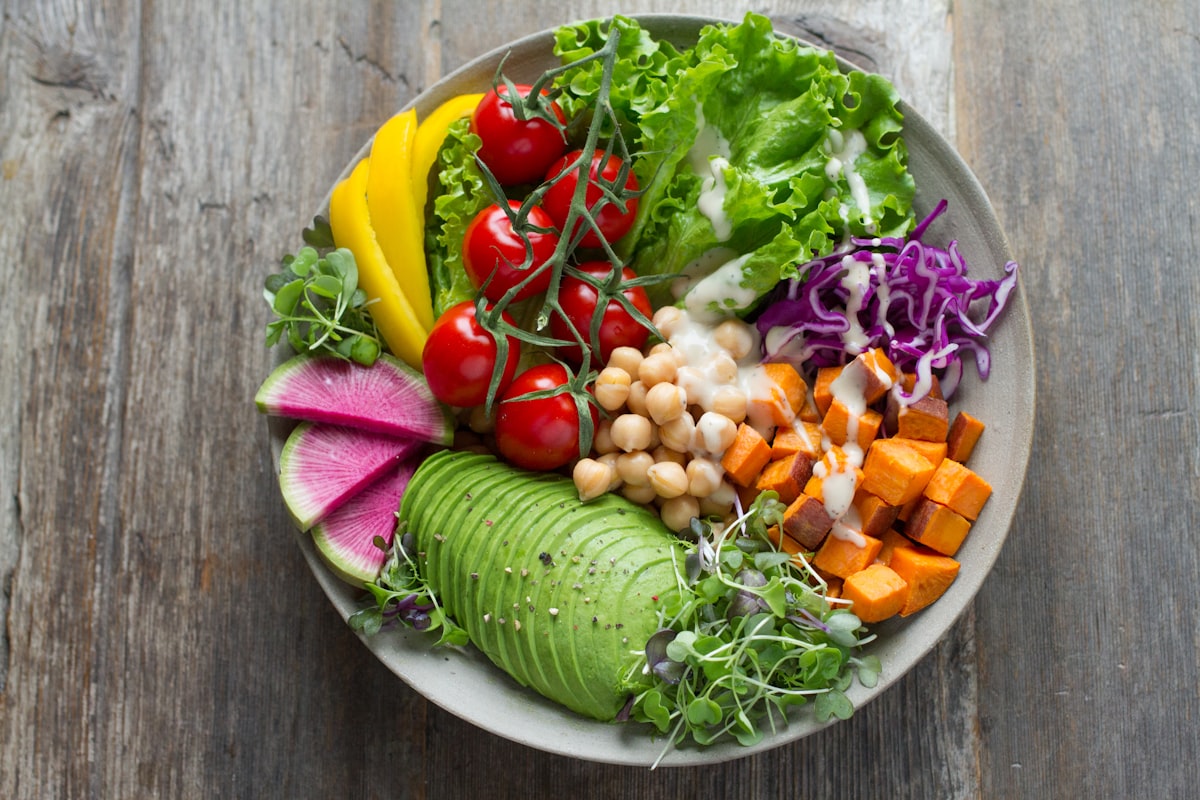
Your diet doesn’t just feed you. It feeds the trillions of bacteria in your gut that regulate your immune defenses, metabolize your hormones, and determine which pathogens survive long enough to reach your bladder. We’ve covered the gut-bladder axis as a concept elsewhere on this site. This article is about what you can actually do about it with food: how fiber, prebiotics, fermented foods, and targeted probiotics can shift your gut microbiome toward one that protects your bladder rather than undermining it.
Research makes one thing clear: women prone to recurrent UTIs have measurably different gut bacteria than women who rarely get them. They’re missing the species that ferment dietary fiber into butyrate, a short-chain fatty acid that keeps the gut lining sealed and the immune system calibrated. And for postmenopausal women, there’s an additional mechanism most people haven’t heard of, the estrobolome, where gut bacteria directly control how much active estrogen circulates in your body.
Key Takeaways
- UTI-prone women have significantly fewer butyrate-producing gut bacteria, including Faecalibacterium and Roseburia
- Dietary fiber fuels these protective bacteria, but most people eat roughly half the 25–30 grams needed for a healthy gut microbiome
- The estrobolome links gut dysbiosis to postmenopausal bladder infections through reduced estrogen recycling
- One clinical trial found L. crispatus reduced UTI recurrence by 93% in women who achieved vaginal colonization
- Prebiotic-rich foods like garlic, onions, and cooked-and-cooled potatoes directly nourish the gut bacteria your bladder depends on
The Butyrate Producers You’re Probably Not Feeding
The bacteria most consistently depleted in UTI-prone women aren’t obscure. They’re the workhorses of a healthy gut: Faecalibacterium prausnitzii, Roseburia species, and Eubacterium hallii. What they share is a dependence on dietary fiber and a talent for converting it into butyrate.
Why does butyrate matter for your bladder? Three reasons. It maintains the gut barrier, preventing bacterial translocation. It calibrates immune responses so your body can recognize and destroy uropathogens before they establish colonies. And it suppresses the low-grade systemic inflammation that researchers found in women with recurrent UTIs [1].
Side note: butyrate’s anti-inflammatory role extends well beyond the urinary tract. It’s one of the reasons high-fiber diets are linked to lower colorectal cancer risk — the same molecule that protects your gut lining also suppresses abnormal cell growth. But for bladder health, the immune regulation angle matters most.
Researchers at Washington University ran the landmark 2022 study, following 31 women for a full year (15 with a history of recurrent UTIs, 16 without) and collecting monthly stool, urine, and blood samples. Women in the rUTI group had significantly lower gut microbial diversity and specifically depleted butyrate producers. Their blood immune markers resembled those of patients with inflammatory bowel disease. Every UTI episode during the study, all 24 of them, occurred in the rUTI group. Zero in controls [1].
Diet is the direct connection. These bacteria need fiber. Without it, they decline.
Average fiber intake in Western diets hovers around 15–20 grams per day. The minimum needed to sustain butyrate-producing populations is 25–30 grams. That gap of just 10 to 15 grams may be the difference between a gut that keeps uropathogens suppressed and one that lets them flourish.
The Estrobolome: Where Gut Bacteria Meet Your Hormones
This is the part of the gut-bladder connection that gets overlooked. And for postmenopausal women dealing with recurrent bladder infections, it may be the single most relevant mechanism.
In molecular terms, the estrobolome is a subset of gut bacterial genes that encode an enzyme called beta-glucuronidase (β-glucuronidase). This enzyme does something specific: it converts conjugated (inactive) estrogen back into its free, active form, allowing it to be reabsorbed into the bloodstream through the gut wall [3]. Your liver sends estrogen to the gut for excretion. Gut bacteria decide how much gets recycled back.
When your gut microbiome is diverse and healthy, β-glucuronidase activity keeps circulating estrogen at functional levels. Dysbiosis drops this enzyme activity. Less estrogen gets recycled. Circulating levels fall further.
Why does this matter for your bladder? Estrogen maintains the vaginal and urethral microbiome. It stimulates vaginal epithelial cells to produce glycogen, which feeds protective Lactobacillus species. These lactobacilli produce lactic acid, keeping vaginal pH low enough to suppress E. coli colonization [3]. Remove estrogen from this equation, and the vaginal flora shifts from Lactobacillus-dominant to one overrun with gram-negative bacteria, the same bacteria that cause urinary tract infections.
Clinicians have long attributed postmenopausal UTI risk purely to declining ovarian estrogen. That’s true. But incomplete. If your gut microbiome is also disrupted by antibiotics, poor diet, or chronic stress, you’re losing estrogen from both ends. Ovaries produce less, and the gut recycles less of what remains.
A 2025 review in Frontiers in Endocrinology confirmed this mechanism and highlighted a randomized controlled trial where postmenopausal women receiving a probiotic formula containing Bifidobacterium longum 15M1 and Lactobacillus plantarum 30M5 (both selected for β-glucuronidase activity) showed regulated serum estrogen levels compared to placebo [2]. Small study, needs replication. But it points toward a practical intervention: you may be able to support estrogen recycling by feeding or supplementing the right gut bacteria.
How Dysbiosis Lets Pathogens Through
Mechanically, this is blunt. Your gut is the reservoir. E. coli strains that cause UTIs live in your intestines first, and when conditions favor them, they migrate to the periurethral area and ascend into the bladder.
Researchers at Columbia University tracked 168 kidney transplant recipients and found that when gut E. coli abundance hit just 1% of total bacteria, it independently predicted subsequent UTI development. Genetic analysis confirmed the urinary isolates were identical to the gut strains [4].
One percent. That’s a remarkably low threshold.
And antibiotics make this cyclical. In the largest longitudinal study on the topic (125 UTI patients, 644 stool samples, published in EClinicalMedicine in 2024), gut E. coli abundance spiked 7–14 days after antibiotic treatment ended, precisely when most recurrences happen. Each course of antibiotics also selected for more resistant strains: UPEC found in urine samples showed resistance to 48% of tested antibiotics [5].
It’s a vicious cycle. Antibiotics clear the bladder infection but strip out the protective bacteria that were keeping E. coli suppressed in the gut. Two weeks later, the resistant strains bounce back with less competition. For more on breaking this cycle without abandoning antibiotics entirely, see our guide to natural UTI prevention strategies.
Fiber: The Foundation You Can’t Skip
If there’s one dietary change supported by the gut-bladder axis research, it’s eating more fiber. Not because fiber does anything to your bladder directly, but because it’s the primary fuel source for the bacteria that protect it.
Not all fiber works the same way here. The types that most efficiently boost butyrate production:
Resistant starch. Found in cooked-and-cooled potatoes, rice, oats, and green (unripe) bananas. Cooling cooked starches changes their molecular structure, making them resistant to digestion in the small intestine. They pass intact to the colon, where Faecalibacterium and Roseburia ferment them into butyrate. This is genuinely one of the cheapest dietary interventions available. Cook a batch of potatoes, refrigerate them overnight, eat them cold or gently reheated the next day.
Inulin and FOS (fructooligosaccharides). Found in chicory root, Jerusalem artichokes, garlic, onions, leeks, and asparagus. These are among the most potent prebiotics for selectively feeding Bifidobacterium species, which are independently linked to lower overactive bladder risk. One caveat: onions and garlic are high-FODMAP foods. If you have interstitial cystitis or IBS, introduce them gradually and watch for flare-ups.
Pectin. Found in apples, pears, and citrus peel. Pectin feeds a broad range of beneficial species. A note on citrus: while citrus peel contains pectin, citrus juice and fruit can irritate some bladders. If you’re sensitive, stick to apples and pears. Our foods that irritate the bladder guide covers this in detail.
Beta-glucan. Found in oats, barley, and mushrooms. Supports both butyrate production and immune function.
Your target: 25–30 grams of fiber per day from at least 20–30 different plant sources per week. Researchers at Stanford found that this kind of plant diversity drove greater increases in gut microbial diversity than simply eating high volumes of a few fiber-rich foods [6].
You’ll see cranberry juice recommended everywhere for bladder health. The evidence there is separate from the gut microbiome story, and we’ve covered it in our cranberry article. This guide stays focused on feeding the bacteria that protect you from the inside.
If you’re currently eating 15 grams of fiber daily, don’t jump to 30 overnight. Add 5 grams per week over 3–4 weeks. Sudden increases cause bloating and gas, not because fiber is bad, but because your gut bacteria need time to adjust their populations. Pair the increase with adequate water intake, since fiber absorbs water and dehydration creates its own bladder problems. For meal ideas, see our bladder-friendly meal plan.
Probiotic Strains: Separating Evidence From Marketing
What’s sold versus what’s studied is worlds apart. Most “urinary health” probiotics on store shelves contain generic Lactobacillus strains with no clinical evidence for bladder protection. The strains that have actual trial data behind them are specific:
| Strain | Delivery | Evidence | Key Finding | Limitation |
|---|---|---|---|---|
| L. crispatus CTV-05 (Lactin-V) | Intravaginal | RCT, 100 women | UTI recurrence 15% vs 27% placebo; 93% reduction in colonized women [7] | Requires vaginal application; not widely available |
| L. rhamnosus GR-1 + L. reuteri RC-14 | Oral capsule | Multiple trials | Restored vaginal Lactobacillus dominance in postmenopausal women | Modest direct effect on UTI rates |
| B. longum 15M1 + L. plantarum 30M5 | Oral | Single RCT | Regulated serum estrogen via β-glucuronidase activity [2] | Small sample; needs replication |
Most striking is the L. crispatus data. But that 93% figure requires context: it applied only to women who achieved high-level vaginal colonization with the probiotic. Not everyone did. And the product (Lactin-V) is intravaginal, not an oral capsule from a pharmacy.
For oral probiotics, the picture is less dramatic but still meaningful. L. rhamnosus GR-1 and L. reuteri RC-14 don’t prevent UTIs as directly, but they restore the vaginal Lactobacillus environment that serves as a barrier against ascending uropathogens. We’ve explored this in more detail in our probiotics for bladder health article.
Your urinary microbiome mirrors what’s happening in the gut and vagina. The bladder isn’t sterile. It has its own bacterial community, and when the upstream ecosystems are disrupted, bladder defenses weaken too.
Fermented Foods Deserve Their Own Mention
Fermented foods do something that probiotic capsules can’t easily replicate: they increase overall gut microbial diversity.
Researchers at Stanford randomized 36 healthy adults to either a high-fiber diet or a high-fermented-food diet for 10 weeks. The fermented food group (consuming yogurt, kefir, kimchi, sauerkraut, kombucha, and other fermented vegetables) showed significantly increased microbiota diversity and decreased inflammatory markers, including a reduction in 19 inflammatory proteins. The high-fiber group did not see the same diversity boost during the study period, though fiber remains critical for sustaining existing populations [6].
Greater microbial diversity means more competition for E. coli and other uropathogens, more varied short-chain fatty acid production, and a more resilient immune response.
Aim for 2–3 servings of fermented foods daily. Kefir is one of the most potent options because it contains more diverse strains than yogurt. Sauerkraut and kimchi work if they’re raw and unpasteurized; pasteurization kills the live cultures. Even a tablespoon of raw sauerkraut with a meal counts.
Where the Evidence Falls Short
I’d be overselling this if I didn’t lay out the gaps honestly.
A 2024 narrative review in Nutrients examined eight human studies linking gut dysbiosis to UTI susceptibility. Only two of the nine probiotic studies reviewed reported statistically significant reductions in UTI incidence [8]. The overall evidence was called inconclusive. Part of the problem is that trials used different strains, doses, and delivery methods, so comparing them is like comparing different medications. But the inconsistency is real.
Fiber’s benefits for butyrate production are well established. No intervention study, however, has directly tested whether increasing dietary fiber reduces UTI rates. The logic runs: low fiber leads to fewer butyrate producers, which leads to weaker immune surveillance, which leads to more UTIs. Each link has evidence. The full chain? Untested end-to-end in a clinical trial.
Estrobolome research is early-stage. The concept is well-supported by basic science, and the probiotic RCT on estrogen regulation is encouraging. But no trial has yet shown that estrobolome-targeted probiotics reduce UTI rates in postmenopausal women specifically. That study needs to happen.
And individual variation matters enormously. A 2024 study in npj Biofilms and Microbiomes showed that butyrate production potential varies significantly between individuals depending on their baseline microbiome composition [9]. The same fiber source that dramatically boosts butyrate in one person may do little for another. This isn’t a reason to skip fiber — it’s a reason to eat a wide variety of it.
Red Flags That Need Medical Attention
Dietary changes are a long game. They won’t help an active infection, and certain symptoms shouldn’t wait for your gut to catch up.
Get to a doctor if you develop burning with urination, fever, or flank pain. These suggest an active UTI or kidney infection that needs antibiotics regardless of your gut health strategy. If you’re getting three or more UTIs per year despite dietary changes and probiotic use, ask for a urology referral. Something beyond diet may be contributing: anatomical factors, incomplete emptying, or urinary retention issues that need investigation.
Postmenopausal women experiencing recurrent UTIs should specifically discuss vaginal estrogen with their GP. Topical estrogen is one of the most effective single interventions for preventing postmenopausal UTIs, and it works alongside the gut-focused strategies described here.
Common Questions
How much fiber do I need to support bladder health?
Target 25–30 grams per day from a variety of plant sources: legumes, whole grains, vegetables, fruits, nuts, and seeds. The diversity matters as much as the quantity. Research suggests eating 30 or more different plant foods weekly drives the greatest increases in microbial diversity [6]. If you’re currently well below 25 grams, increase by about 5 grams per week to give your gut bacteria time to adjust.
What is the estrobolome and why does it matter for UTIs?
The estrobolome is a collection of gut bacterial genes that produce β-glucuronidase, an enzyme that reactivates estrogen for reabsorption into your bloodstream [3]. When gut dysbiosis suppresses this enzyme, circulating estrogen drops. For postmenopausal women, this compounds the estrogen decline from menopause, leading to loss of protective vaginal lactobacilli and increased E. coli colonization, both of which raise UTI risk.
Can probiotics prevent UTIs without antibiotics?
Not as a complete replacement, but certain strains show strong preventive effects. Intravaginal L. crispatus reduced recurrence by up to 93% in women who achieved colonization [7]. Oral strains like L. rhamnosus GR-1 help restore vaginal flora. These work best as part of a broader prevention strategy that includes adequate fiber, limiting unnecessary antibiotics, and, for postmenopausal women, possibly vaginal estrogen.
Are fermented foods or probiotic supplements better for bladder health?
They address different aspects of the problem. Fermented foods (kefir, kimchi, raw sauerkraut) boost overall gut diversity, which is broadly protective. Probiotic supplements deliver targeted strains at clinical doses. A Stanford trial found fermented foods increased gut diversity more effectively than a high-fiber diet alone over 10 weeks [6]. For UTI prevention specifically, strain-specific supplements have stronger clinical data. Using both is reasonable.
How long before dietary changes improve my gut microbiome?
Gut bacteria start responding to dietary shifts within 24–48 hours, but stable, meaningful changes in community composition take 2–4 weeks of consistent eating. Butyrate production increases measurably within days of adding resistant starch or inulin-rich foods. Don’t expect overnight results. Think of it as gradually establishing a new ecosystem.
What This All Means in Practice
The gut-bladder axis isn’t a single mechanism you can target with one supplement. It’s a web of connections (bacterial migration, immune regulation, hormone recycling, barrier integrity) and they all respond to the same input: what you eat.
Strongest moves, based on where the evidence stands today: eat more fiber from diverse plant sources to sustain your butyrate producers. Include fermented foods daily to build microbial diversity. If you’re dealing with recurrent bladder infections, look for probiotic products containing clinically studied strains rather than generic formulations. And if you’re postmenopausal, talk to your doctor about both vaginal estrogen and gut health, since they address the same underlying vulnerability from different angles.
Researchers are working on next-generation probiotics designed specifically for the gut-bladder axis, including strains selected for β-glucuronidase activity and anti-adhesion properties. Until those arrive, a fiber-rich diet that supports your gut microbiome is the most accessible way to protect your bladder health.
References
-
Worby CJ, Schreiber HL 4th, Straub TJ, et al. Longitudinal multi-omics analyses link gut microbiome dysbiosis with recurrent urinary tract infections in women. Nature Microbiology. 2022;7(5):630-639. PubMed
-
Wang Y, Liu H, Zhao X, et al. Gut microbiota has the potential to improve health of menopausal women by regulating estrogen. Frontiers in Endocrinology. 2025;16:1562332. PMC
-
Baker JM, Al-Nakkash L, Herbst-Kralovetz MM. Estrogen-gut microbiome axis: Physiological and clinical implications. Maturitas. 2017;103:45-53. PubMed
-
Magruder M, Sholi AN, Gong C, et al. Gut uropathogen abundance is a risk factor for development of bacteriuria and urinary tract infection. Nature Communications. 2019;10:5521. PubMed
-
Choi JH, Thanert R, Reske KA, et al. Gut microbiome correlates of recurrent urinary tract infection: a longitudinal, multi-center study. EClinicalMedicine. 2024;72:102490. PubMed
-
Wastyk HC, Fragiadakis GK, Perelman D, et al. Gut-microbiota-targeted diets modulate human immune status. Cell. 2021;184(16):4137-4153.e14. PubMed
-
Stapleton AE, Au-Yeung M, Hooton TM, et al. Randomized, placebo-controlled phase 2 trial of a Lactobacillus crispatus probiotic given intravaginally for prevention of recurrent urinary tract infection. Clinical Infectious Diseases. 2011;52(10):1212-1217. PubMed
-
Iqbal U, Halkjaer SI, Ghathian KSA, Heintz JE, Petersen AM. The Role of the Gut Microbiome in Urinary Tract Infections: A Narrative Review. Nutrients. 2024;16(21):3615. PubMed
-
Hayer SS, Alvarez S, Ghattas KN, et al. Investigating the response of the butyrate production potential to major fibers in dietary intervention studies. npj Biofilms and Microbiomes. 2024;10:55. Nature
Frequently Asked Questions
- How much fiber do I need to support bladder health?
- Aim for 25 to 30 grams of dietary fiber per day from diverse plant sources. Most adults only get 15 to 20 grams. Increasing fiber feeds the butyrate-producing bacteria linked to lower UTI risk and better gut barrier function. Add fiber gradually over 2 to 3 weeks to avoid bloating.
- What is the estrobolome and why does it matter for UTIs?
- The estrobolome is a collection of gut bacterial genes that produce enzymes called beta-glucuronidases. These enzymes reactivate estrogen for reabsorption into your bloodstream. When gut dysbiosis reduces this enzyme activity, circulating estrogen drops, vaginal Lactobacillus populations decline, and E. coli colonization increases, raising UTI risk. This is especially relevant for postmenopausal women.
- Can probiotics prevent UTIs without antibiotics?
- Not as a standalone replacement, but specific strains show promise for prevention. Intravaginal Lactobacillus crispatus reduced UTI recurrence by up to 93% in women who achieved colonization. Oral Lactobacillus rhamnosus GR-1 and L. reuteri RC-14 help restore vaginal flora. These are adjuncts to medical care, not substitutes for treating active infections.
- Are fermented foods or probiotic supplements better for bladder health?
- They work through different mechanisms. Fermented foods like kefir, kimchi, and sauerkraut increase overall gut microbial diversity, which is broadly protective. Probiotic supplements deliver specific strains in controlled doses. A Stanford trial found fermented foods boosted gut diversity more than a high-fiber diet alone. For targeted UTI prevention, strain-specific supplements have stronger clinical evidence.
- How long before dietary changes improve my gut microbiome?
- Gut bacteria respond to dietary shifts within 24 to 48 hours, but meaningful, stable changes in microbiome composition take 2 to 4 weeks of consistent eating patterns. Butyrate production increases measurably within days of adding resistant starch or inulin-rich foods. Expect gradual improvement rather than overnight results.
Medical Disclaimer: The information provided is for educational purposes only and should not be considered as medical advice. Always consult with a qualified healthcare professional before making any changes to your diet, supplement regimen, or treatment plan.
Was this article helpful?